
 By Muzammil Abbasi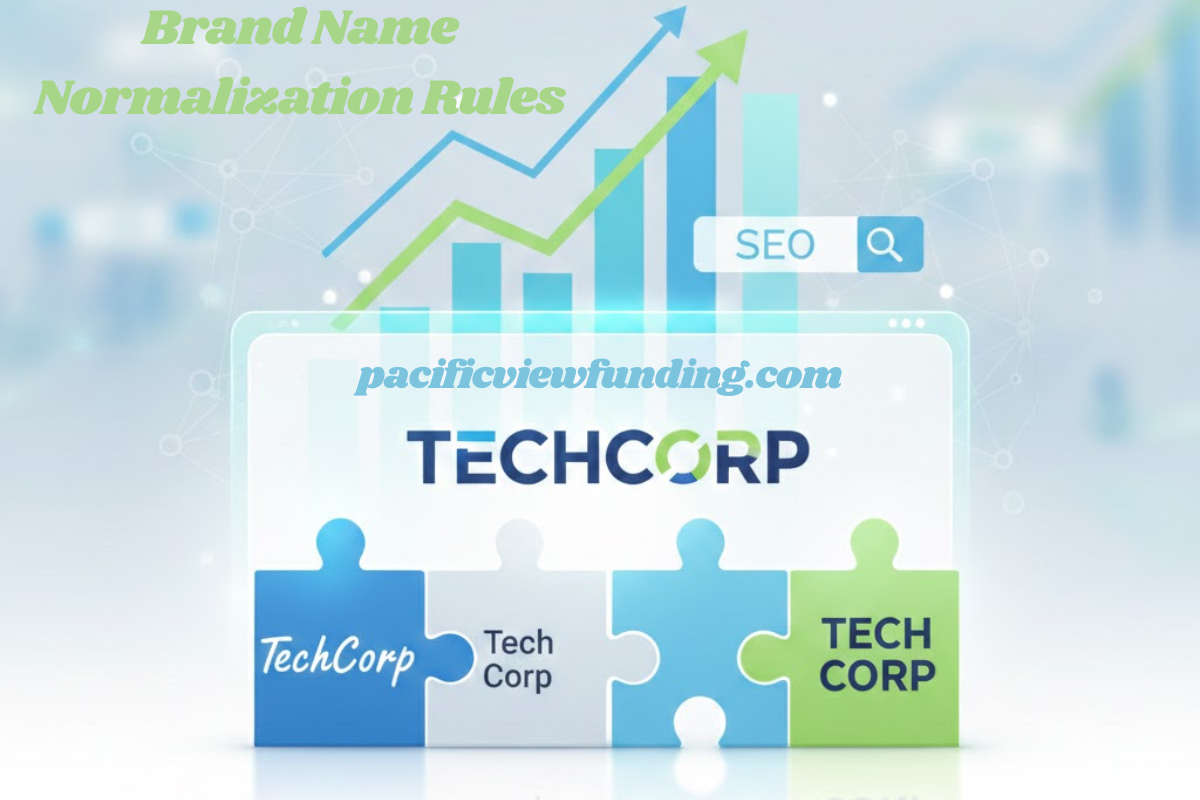
In the digital age, your brand’s name is more than just a logo on a business card. It’s a search term, a hashtag, a directory listing, and a mention across countless platforms. Yet, for many organizations, how that name appears online is a chaotic patchwork of variations—creating confusion for customers and search engines alike. This is where brand name normalization rules come into play, acting as the essential framework for consistency that can make or break your discoverability, credibility, and revenue.
This comprehensive guide will demystify brand name normalization, explain why it’s a non-negotiable component of modern SEO and brand strategy, and provide a clear, actionable blueprint for implementing it across your organization.
What Are Brand Name Normalization Rules?
At its core, brand name normalization is the process of defining and enforcing a single, standardized way to write your brand name across all digital (and often physical) touchpoints. It’s about eliminating variations and establishing a “single source of truth” for your brand’s primary identifier.
Think of it as the rulebook for how your brand name should be presented. These normalization rules answer critical questions:
-
Do we use “TechCorp,” “Tech Corp,” or “TechCorp International LLC”?
-
Is it “eBay” (with a lowercase ‘e’) or “EBay”?
-
Do we include punctuation, like “Macy’s” with an apostrophe, or simplify to “Macys” for URLs?
-
How do we handle common abbreviations or acronyms?
Without formalized rules for brand naming, you inevitably get inconsistency. Marketing uses one version, sales uses another, product packaging has a third, and customer reviews spell it a fourth way. This fragmentation dilutes brand equity and creates a nightmare for search engine optimization.
Why Brand Name Normalization is a Strategic Imperative
The impact of inconsistent branding extends far beyond aesthetics. It directly affects your bottom line through several key channels:
1. The SEO and Discoverability Powerhouse
Search engines like Google are sophisticated, but they still rely on signals to understand entities. When your brand is referenced in dozens of different ways—across your own site, in backlinks, on social media, and in directories—Google may struggle to consolidate that equity. This can lead to:
-
Ranking Dilution: Instead of all signals pointing to one canonical brand entity, they are split across variations, weakening your authority for your core brand terms.
-
Missed Organic Traffic: A potential customer searching for “BestWidget Co.” might not find you if your site primarily uses “BestWidgetCo” (no space). They may end up with a competitor.
-
Poor Local SEO: For businesses with physical locations, inconsistencies in your business name across citations (Google Business Profile, Yelp, Apple Maps) severely damage local pack rankings.
Implementing consistent brand name rules ensures that every mention acts as a unified vote for your brand’s prominence in search results.
2. Building Trust and Professionalism
Consistency breeds trust. A brand that can’t settle on how to spell its own name appears amateurish or, worse, unreliable. Conversely, a brand that presents itself uniformly across every platform—from its official website to a third-party news article—projects control, attention to detail, and professionalism. This builds consumer confidence at a subconscious level.
3. Streamlining Operations and Analytics
Internally, normalization is a godsend. It eliminates debates and guesswork for content creators, designers, and social media managers. Externally, it cleans your data. In your CRM, analytics platforms, and social listening tools, you’ll have clean, aggregated data for “Acme Corp,” not scattered entries for “Acme,” “Acme Corporation,” and “Acme Corp.”
Crafting Your Brand Name Normalization Rules: A Step-by-Step Framework
Creating your rule set is a deliberate process. Follow these steps to build a robust and practical framework.
Step 1: Audit and Document Existing Variations
Begin by conducting a thorough audit. Search for your brand name online, scour your own assets, and check major directories. Document every variation you find, including:
-
Spelling and spacing (Tech Solutions vs. TechSolutions)
-
Capitalization (iOS vs. Ios)
-
Punctuation (Sam’s Club vs. Sams Club)
-
Legal vs. DBA names (International Business Machines Corporation vs. IBM)
-
Common misspellings and abbreviations
Step 2: Define Your “Golden Record”
This is your single, authoritative version of the brand name. It is the form you will use in all formal communications and strive to enforce everywhere. Consider:
-
Legal Precision vs. Brand Simplicity: Your legal name may be “North American Widgets, Inc.” but your customer-facing “golden record” might be “WidgetCo.”
-
Typography: Precisely define capitalization (e.g., “adidas” not “Adidas”), spacing, and any required punctuation.
Step 3: Establish Formal Rules for Different Contexts
Your “golden record” is the ideal, but practicalities require guidelines for specific use cases. Your brand name normalization guidelines should cover:
-
Digital & URL Usage: Often, this is a simplified, lowercase, hyphenated, or concatenated version (e.g., “golden-record-brand” or “goldenrecordbrand”).
-
Social Media Handles: Define your preferred handles across platforms and provide alternatives if your ideal is taken.
-
Typography in Text: Specify how the name should be treated in body copy (e.g., “Always use ‘IKEA’ in all caps, even at the beginning of a sentence.”).
-
Handling by Third Parties: Provide a clear, public-facing style guide for journalists, partners, and influencers to follow.
Step 4: Create a “Forbidden Variations” List
Explicitly state the incorrect forms. For example: “Never use ‘Xerox’ as a verb. Never write ‘Fed-Ex.’ Do not use ‘Kleenex’ in lowercase to refer to facial tissue.”
Implementation: Making Normalization Rules Stick
A rulebook no one follows is useless. Integration is key.
-
Develop a Centralized Brand Style Guide: This living document should house your normalization rules prominently. Make it accessible to every team—marketing, sales, product, support.
-
Leverage Technology:
-
SEO & Content Platforms: Use tools like Clearscope or MarketMuse to flag brand term inconsistencies during content creation.
-
Digital Asset Management (DAM): Enforce correct naming in all stored logos and templates.
-
CRM and CMS Systems: Configure default fields and validations to use the standardized name.
-
-
Conduct Regular Training and Audits: Onboard new employees on the style guide. Schedule quarterly audits of key web pages, directory listings, and sales materials to catch drift.
The SEO-Specific Playbook for Brand Normalization
For SEO professionals, this goes into the technical realm.
-
On-Page SEO: Standardize the use of your brand name in Title Tags, H1 headers, meta descriptions, and image alt text. Your primary keyword should often be your normalized brand name.
-
Schema Markup: Implement
OrganizationandLocalBusinessschema using your normalized name. This gives Google an explicit, unambiguous signal about your brand’s identity. -
Citation Building: When pursuing local citations or backlinks, provide the source with your exact normalized name and request its use. Consistency here is paramount.
-
Internal Linking: Use a consistent anchor text for brand-name links (e.g., always link “WidgetCo” to the homepage, not “click here” or “our company”).
Common Pitfalls and How to Avoid Them
-
Over-Optimization: Avoid awkwardly stuffing your normalized brand name where it doesn’t read naturally. Quality and user experience come first.
-
Lack of Buy-In: This must be a company-wide initiative championed from leadership down. Explain the “why”—tying it to revenue, traffic, and brand strength.
-
Inflexibility: While consistency is goal, some contexts (like character-limited social posts) may require slight adaptation. Your rules should account for this with clear hierarchies.
Conclusion: Normalization as a Foundation for Growth
Brand name normalization rules are not a one-time SEO task; they are an ongoing component of brand governance. In a world saturated with information, clarity and consistency are your most powerful assets. By defining and enforcing how your brand is presented, you consolidate search equity, build undeniable trust with your audience, and create a streamlined operational foundation for scalable growth.
The effort you invest in standardizing your brand name pays dividends in heightened visibility, strengthened reputation, and, ultimately, increased customer loyalty and sales.