
 By Muzammil Abbasi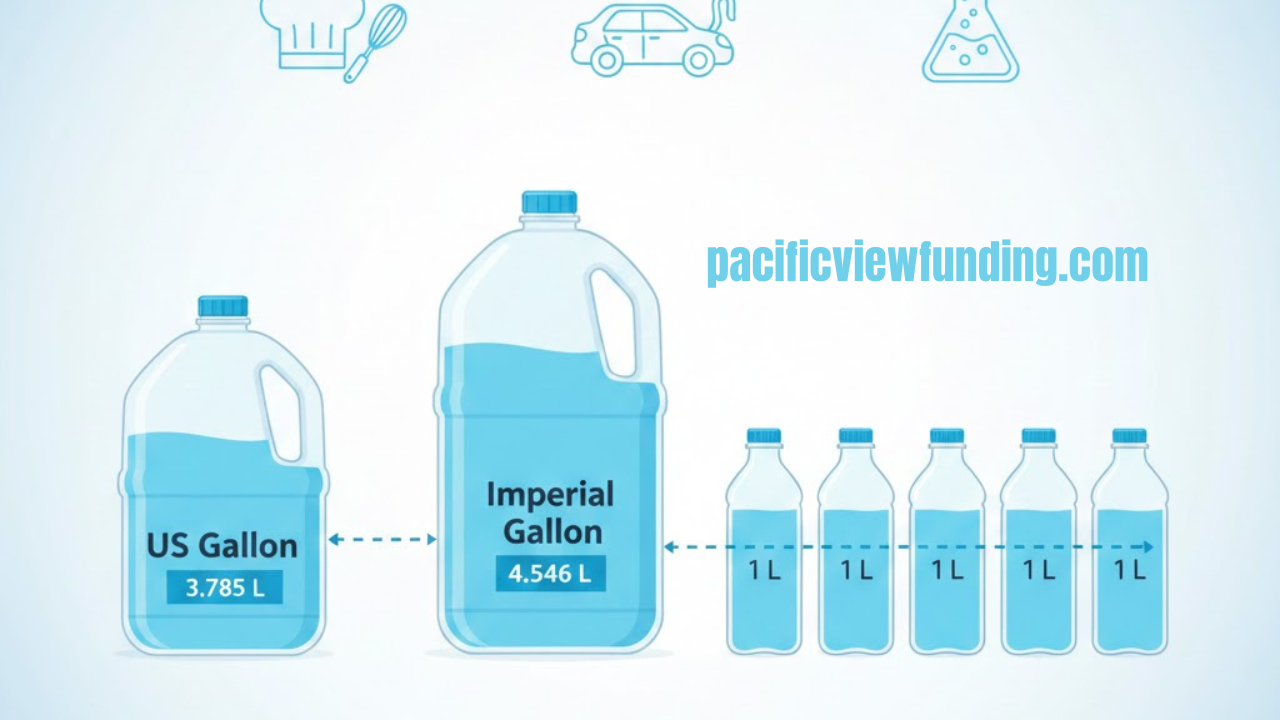
Understanding how many liters are in a gallon is a fundamental conversion that bridges two major measurement systems used worldwide. This knowledge is essential for cooking, travel, science, and international business. While the simple answer is approximately 3.785 liters, the full picture is more nuanced, as the exact number depends on which gallon you’re using. This guide provides you with a clear, practical understanding of both US and imperial gallons, their histories, and how to convert between them with ease.
The Core Conversion: A Quick Answer
If you’re in a hurry, here is the essential answer:
-
1 US gallon = 3.785411784 liters (commonly rounded to 3.785 liters).
-
1 Imperial (UK) gallon = 4.54609 liters.
This means a UK gallon is about 20% larger than a US gallon. This difference is crucial; using the wrong conversion can lead to significant errors in recipes, fuel calculations, or scientific measurements.
To put it another way, a liter is defined as 0.264172 US gallons or 0.219969 Imperial gallons.
Understanding the Units: Liters and Gallons Defined
To master the conversion, it helps to know what each unit represents.
What is a Liter?
A liter (symbol: L or l) is a metric unit of volume. It is not a base SI unit but is accepted for use within the International System of Units. By definition, one liter is equal to 1 cubic decimeter (dm³), 1,000 cubic centimeters (cm³), or 1/1,000 of a cubic meter (m³).
The liter has an interesting history: from 1901 to 1964, it was defined as the volume of one kilogram of pure water at maximum density. This definition was abandoned when scientists realized the prototype kilogram was slightly off, reverting to the cubic decimeter definition we use today.
Common Uses: Liters are used globally to measure liquid volumes (beverages, fuel) and the capacity of many everyday items like backpacks, car trunks, refrigerators, and recycling bins.
What is a Gallon?
A gallon is a unit of volume for liquid capacity in the US customary and British imperial systems. Its definition varies, which is the source of the confusion.
-
US Gallon: Defined as 231 cubic inches, which is exactly 3.785411784 liters.
-
Imperial (UK) Gallon: Defined as 4.54609 liters. Historically, it was based on the volume of 10 pounds of water at a specific temperature.
The term “gallon” originates from the Old Northern French word “galon.” It evolved in England as a measure for wine and beer, leading to various historical standards like the wine gallon and ale gallon.
Common Uses: In the United States, gallons are used for larger containers (milk, paint, ice cream) and expressing fuel economy (miles per gallon). The imperial gallon is used similarly in the UK, Canada, and a few Caribbean nations.
Comparison of Volume Units
| Unit | Metric Equivalent (Liters) | Primary Region of Use |
|---|---|---|
| 1 US Gallon | 3.785 L | United States |
| 1 Imperial Gallon | 4.546 L | United Kingdom, Canada |
| 1 Liter | Base Unit | Worldwide (metric system) |
How to Convert Between Gallons and Liters
You can convert using multiplication, division, or an online calculator.
1. Simple Formulas for Manual Conversion
The conversions rely on the exact factors mentioned above.
To convert US gallons to liters:
Liters = US Gallons × 3.785411784
Example: 5 US gallons = 5 × 3.785 = 18.927 liters.
for convert liters to US gallons:
US Gallons = Liters × 0.264172 (or Liters ÷ 3.785411784)
Example: 10 liters = 10 × 0.264172 = 2.64172 US gallons.
convert Imperial gallons to liters:
Liters = Imperial Gallons × 4.54609
Example: 5 Imperial gallons = 5 × 4.546 = 22.73 liters.
To convert liters to Imperial gallons:
Imperial Gallons = Liters × 0.219969 (or Liters ÷ 4.54609)
Example: 10 liters = 10 × 0.219969 = 2.19969 Imperial gallons.
2. Using a Conversion Table
A reference table is useful for common values. The table below shows conversions for US gallons.
US Gallons to Liters Conversion Table
| US Gallons | Liters (L) | US Gallons | Liters (L) |
|---|---|---|---|
| 0.25 (1/4) | 0.946 L | 10 | 37.854 L |
| 0.5 (1/2) | 1.893 L | 20 | 75.708 L |
| 1 | 3.785 L | 30 | 113.562 L |
| 2 | 7.571 L | 40 | 151.416 L |
| 3 | 11.356 L | 50 | 189.271 L |
| 4 | 15.142 L | 75 | 283.906 L* |
| 5 | 18.927 L | 100 | 378.541 L |
*Calculated value
3. Online Calculators and Tools
For precise or unusual conversions, online tools are the fastest and most accurate method. Reputable scientific and educational sites offer free converters where you simply input your value and get an instant result.
Practical Applications and Real-World Examples
Knowing this conversion is not just academic; it has everyday uses.
-
Cooking and Baking: International recipes often use different units. A US recipe calling for 1 gallon of soup broth requires about 3.8 liters. A British scone recipe using 1 imperial gallon of milk would need a massive 4.55-liter jug!.
-
Fuel Efficiency and Travel: When comparing a European car’s fuel consumption (e.g., 5 L/100km) to an American standard (MPG), conversion is essential. Similarly, filling a rental car’s 15-gallon tank in Europe requires knowing you need about 56.8 liters (15 US gal × 3.785).
-
Beverage and Alcohol Industry: Standard bottle sizes are often in milliliters or liters, but wholesale and taxation, especially in the US, are done in wine gallons. Official US tables convert common sizes like 750 mL (0.198 gal) and 1.75 L (0.462 gal) for tax purposes.
-
Science and Industry: Laboratories and factories operating with international partners must accurately convert between systems to ensure consistency in chemical mixtures, product formulations, and packaging.
Troubleshooting Common Conversion Mistakes
-
Mixing Up US and Imperial Gallons: This is the most common error. Always confirm the gallon’s origin. If unsure, context (country of origin) is your best clue.
-
Inaccurate Rounding: For everyday use, 3.785 is sufficient. For scientific, engineering, or financial calculations (like fuel tax), use more precise figures (3.785411784) or an online calculator.
-
Confusing Liters with Other Units: Remember that a liter is a measure of volume, not weight or mass. A “gallon of milk” and a “gallon of water” have the same volume but different weights.
Conclusion: Mastering the Conversion
So, how many liters are in a gallon? The answer is 3.785 liters if you’re using the US gallon, and 4.546 liters if you’re using the Imperial gallon. This simple distinction unlocks confident navigation between the world’s two primary measurement systems.
Whether you’re scaling a recipe, calculating fuel costs on a road trip, or working on an international project, keeping the key conversion factors handy—3.785 and 4.546—will ensure accuracy. When in doubt, leverage a reliable online conversion tool for precision.
Test Your Knowledge!
Now that you’ve learned the differences between US and Imperial gallons, can you solve this? A British recipe calls for 2 gallons of water. Your American measuring jug shows liters. How many liters do you need to measure? (Hint: Use the Imperial gallon conversion). Share your answer in the comments below, and let us know what practical situation you’ve used this conversion for!