
 By Muzammil Abbasi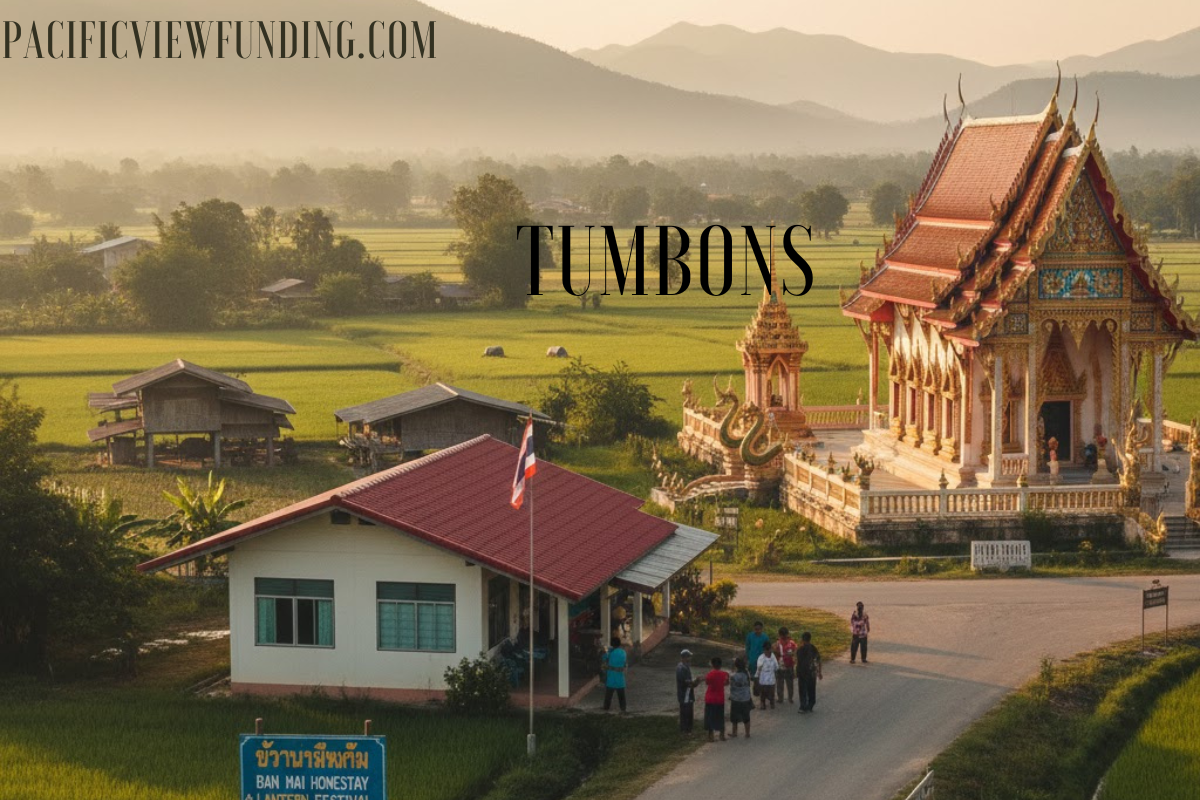
When exploring Thailand, visitors often marvel at its bustling cities, pristine beaches, and ornate temples. Yet, to truly understand the soul of the nation, one must look deeper—to the tumbons. This fundamental administrative division is more than just a geographic term; it is the bedrock of Thai community life, governance, and cultural identity. In this comprehensive guide, we’ll explore what tumbons are, their historical significance, how they function today, and why they are essential for anyone seeking an authentic experience of Thailand.
What Exactly is a Tambon? Understanding the Basics
Let’s start with the pronunciation and spelling. You’ll encounter the term as tambon, tumbon, or tumbol. The standard Romanization from Thai “ตำบล” is tambon, but “tumbon” is a common phonetic spelling used by English speakers. For the purpose of SEO and common searches, we’ll use both variations naturally throughout this article.
A tumbon is a local administrative subdivision in Thailand. It is the third level of governance, sitting below the province (changwat) and the district (amphoe). To visualize it:
-
Country: Thailand
-
First Level: Province (Changwat) – e.g., Chiang Mai
-
Second Level: District (Amphoe) – e.g., Mae Rim
-
Third Level: Tambon / Tumbon – e.g., Mae Sa
-
Fourth Level: Village (Muban)
Think of a tumbon as a collection of villages, or as a small township. It is the primary point of contact for most rural Thais when dealing with administrative tasks, local development, and community affairs.
A Journey Through Time: The Historical Evolution of Tumbons
The tumbon system is not a modern invention. Its roots are deeply embedded in Thailand’s historical socio-political structures.
-
Pre-Modern Era: Before the late 19th century, Thailand (then Siam) was a network of semi-independent city-states and principalities. Local lords governed areas that functioned similarly to modern tumbons, focusing on tax collection, manpower, and local justice.
-
Thesaphiban Reforms: The most significant transformation occurred under King Chulalongkorn (Rama V) in the 1890s. His minister, Prince Damrong Rajanubhab, implemented the Thesaphiban system, which centralized administration and formally established the modern hierarchy of province, district, and tumbon. This was crucial for unifying the nation and strengthening the central government’s reach.
-
20th Century to Present: The role of the tumbon has evolved from a purely administrative unit to a more democratic local government entity. The Tambon Administrative Organization (TAO), established in 1994, marked a pivotal shift, granting tumbons legal status, budgetary authority, and elected councils to manage their own development.
The Nuts and Bolts: How a Tumbon Functions Today
Today, a tumbon is a dynamic entity with clear responsibilities. Its operations are managed by the Tambon Administrative Organization (TAO) or, in some cases, a Tambon Council. Key functions include:
-
Local Infrastructure: Maintaining and building local roads, bridges, water supply systems, and public spaces.
-
Public Health: Supporting local health stations and promoting sanitation and disease prevention.
-
Education: Assisting with the maintenance of local nursery and primary schools.
-
Waste Management: Organizing garbage collection and disposal within the tumbon.
-
Local Economy: Supporting agricultural projects, local markets, and community-based tourism initiatives.
-
Civil Registration: Assisting with the recording of births, deaths, and house registrations, which is vital for national data.
The head of the TAO is an elected official, making the tumbon the most grassroots level of democratic governance in Thailand. This structure ensures that local needs and voices are directly addressed.
Beyond Administration: The Cultural Soul of the Tumbon
To view tumbons merely as administrative units is to miss their true essence. They are the keepers of Thailand’s diverse cultural tapestry.
-
Micro-Cultures: Each tumbon often has its own unique traditions, festivals, dialects, and culinary specialties. A tumbon in Isaan (Northeast Thailand) will have a distinct character from one in the deep South or the Central plains.
-
The Temple as a Hub: The local Buddhist temple (wat) is almost always the spiritual and social center of a tumbon. It hosts important festivals, ceremonies, and community meetings, binding residents together.
-
Agricultural Identity: Many tumbons have economies and daily rhythms tied to specific crops—whether it’s rice farming, rubber tapping, fruit orchards, or fishing communities. This shapes their landscapes, festivals, and way of life.
-
Local Wisdom: Tumbons are repositories of indigenous knowledge, from traditional medicine and handicrafts (like silk weaving or basketry) to sustainable farming techniques passed down through generations.
Tumbons and Tourism: Your Gateway to Authentic Thailand
For the discerning traveler, venturing into a tumbon is the key to an unforgettable, authentic experience. This is where “Community-Based Tourism” truly thrives.
Why seek out a tumbon for your travels?
-
Escape the Crowds: Move beyond the tourist hotspots of Bangkok, Phuket, or Chiang Mai city to discover serene landscapes and genuine interactions.
-
Immersive Homestays: Live with a local family, participate in daily activities like cooking or farming, and gain a deep understanding of Thai life.
-
Unique Festivals: Experience local festivals that are unknown to the wider tourist circuit, often tied to agricultural cycles or temple anniversaries.
-
Artisan Encounters: Visit villages within a tumbon renowned for specific crafts—pottery in Dan Kwian, silk in Pak Thong Chai, or umbrellas in Bor Sang.
Examples of Tourist-Friendly Tumbons:
-
Tambon Mae Kampong (Chiang Mai): A stunning hillside community known for coffee cultivation, waterfalls, and homestays nestled in the treetops.
-
Tambon Thai Mueang (Phang Nga): Offers a quieter alternative to Phuket, with pristine beaches and a famous sea turtle conservation center.
-
Tambon Bor Sang (Chiang Mai): The “Umbrella Village,” where you can see the beautiful process of making Sa paper and painted umbrellas.
Navigating Practicalities: Addresses and Everyday Life
Your interaction with the tumbon system might be more direct than you think. A standard Thai address always includes the tumbon.
Example Address:
123/4 Village No. 5
Tambon Suthep
Amphoe Mueang
Chiang Mai 50200
Knowing the tumbon is essential for accurate navigation, especially in rural areas where GPS can be imprecise. It’s also crucial for postal services and local logistics.
Challenges and The Future of Tumbons
Like all systems, the tumbon structure faces modern challenges:
-
Urbanization: Youth migration to cities for education and work can drain tumbons of their younger generation, impacting traditional knowledge transfer and local economies.
-
Funding Limitations: While TAOs have budgets, they are often limited, constraining ambitious local development projects.
-
National vs. Local Interests: Balancing national policy with hyper-local needs can sometimes be a complex task.
Despite this, the future of tumbons looks toward sustainable development. There is a growing emphasis on strengthening the TAO system, promoting tumbon-level entrepreneurship (OTOP – “One Tambon, One Product”), and leveraging community-based tourism to create resilient local economies that preserve culture while providing opportunity.
Conclusion
Tumbons are far more than dots on a map or lines in a government chart. They are living, breathing communities that form the unseen backbone of Thailand. They represent a perfect blend of ancient tradition and modern governance, where the past is honored even as the future is built. From the rice fields of the Central Plains to the mountainous villages of the North and the fishing communities of the South, the tumbon is where Thailand’s true heartbeat can be felt.
Understanding this system enriches your perspective, whether you are a researcher, a potential investor, a digital nomad considering a longer stay, or simply a curious traveler. It reveals the intricate layers of Thai society and offers a pathway to experiences that are both profound and personal.