
 By Muzammil Abbasi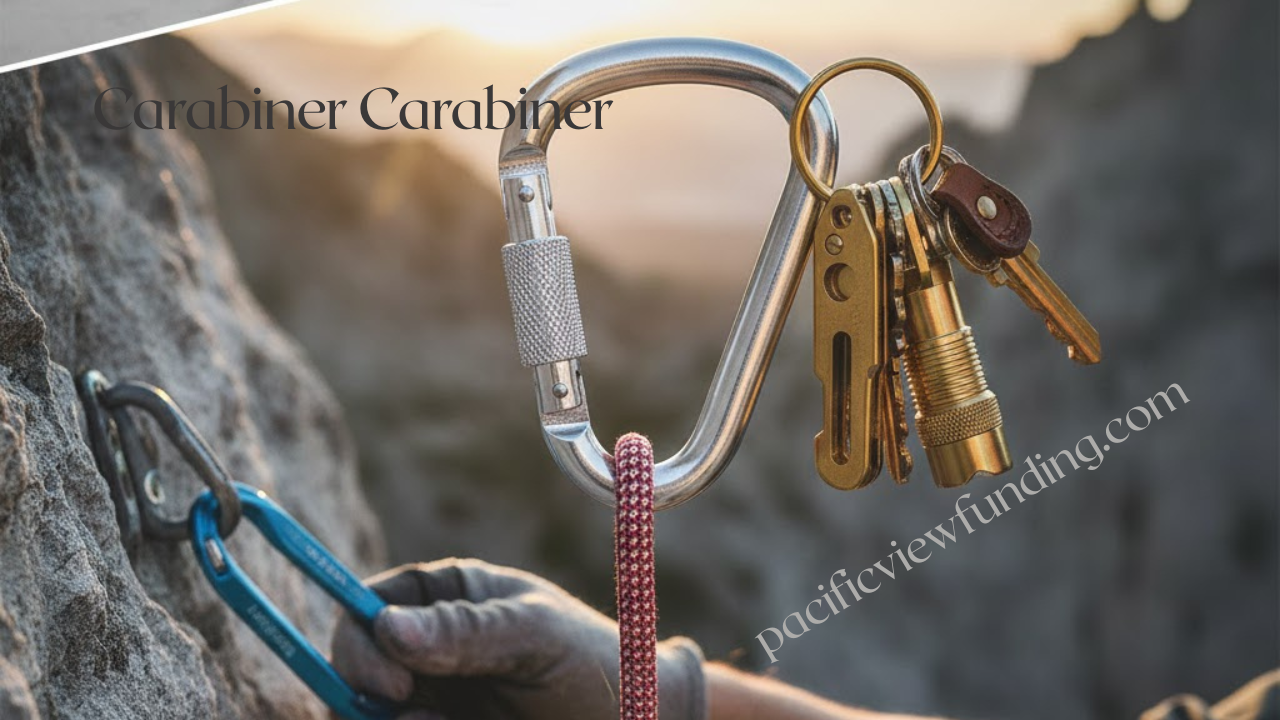
Carabiners are simple metal loops with a gate, but they are indispensable tools for safety, organization, and adventure. Their journey from military rifle hooks to critical climbing and industrial equipment is a testament to ingenious design. This guide will explain how to choose the right carabiner for your needs, decode its technical specifications, and highlight its surprising versatility in everyday life.
The History and Evolution of a Simple Tool
The carabiner has a rich history that stretches back over 150 years. Its name comes from the German word “Karabinerhaken,” meaning “carbine hook,” as it was originally used by light cavalry soldiers to securely attach their carbine rifles to their belts while riding.
The transition to climbing began in the early 1900s with German climber Otto “Rambo” Herzog. After seeing firefighters use pear-shaped hooks, he adapted them for climbing, allowing climbers to connect their rope to pitons quickly and securely for the first time. Early carabiners were made of heavy steel and were fairly weak, only holding body weight.
Major innovations came in the 1930s and 40s:
-
Lighter Materials: French alpinist Pierre Allain introduced aluminum alloy carabiners in 1937, dramatically reducing weight.
-
Stronger Shapes: Italian climbers Riccardo Cassin and Felice Bonaiti developed the asymmetric D-shape, which directs load onto the spine—the carabiner’s strongest axis.
-
Modern Strength: In the late 1960s, Yvon Chouinard (founder of Patagonia and later Black Diamond Equipment) refined designs to increase strength to near-modern standards of about 5,000 pounds.
Today, carabiners are precision-engineered tools found everywhere from mountain faces to construction sites, fashion runways, and keychains.
How to Choose the Right Carabiner
Selecting the correct carabiner depends entirely on its intended use. The key factors are shape, gate type, and whether it needs to lock.
Carabiner Shapes and Their Best Uses
The shape determines how force is distributed and how easy the carabiner is to clip.
| Shape | Pros | Cons | Best For |
|---|---|---|---|
| Asymmetric D (Offset D) | Large gate opening for easy clipping; strong and light. | Not as strong as a true D-shape. | Most common for climbing; sport-climbing quickdraws, general use. |
| Pear (HMS) | Very large gate opening; designed for belaying. | Heavier and more expensive. | Belaying and rappelling, especially with a Munter hitch. |
| D-Shape | Strongest shape; good gate opening. | Can be heavier with a smaller gate than asymmetric D. | Racking trad gear, where maximum strength is needed. |
| Oval | Symmetrical shape prevents load shifting; holds more gear. | Weaker than D shapes; smaller gate opening. | Aid climbing, organizing gear, carabiner-brake rappels. |
Gate Types: Straight, Bent, and Wire
The gate mechanism affects clipping ease, weight, and durability.
-
Straight-Gate: Durable and versatile. Often used on the gear-end of quickdraws or for racking. “Keylock” versions have a smooth nose to prevent snagging.
-
Bent-Gate: Has a concave shape that makes clipping a rope exceptionally easy with one hand. Typically reserved for the rope-end of quickdraws.
-
Wire-Gate: Made from a loop of steel wire. They are lighter, less prone to freezing shut in cold weather, and less susceptible to “gate lash” (inadvertent opening during a fall).
Locking vs. Non-Locking Carabiners
This is a critical safety distinction.
-
Non-Locking: Lighter and quicker to operate. Used where the gate is unlikely to snag and open accidentally, such as on quickdraws.
-
Locking: Feature a locking sleeve (screw-lock, auto-lock, twist-lock) to prevent accidental opening. Essential for any critical connection, like belaying, rappelling, or building anchors.
Understanding Carabiner Strength and Safety Ratings
For life-critical applications, understanding a carabiner’s specifications is non-negotiable.
Reading the Markings: kN Ratings
Every climbing carabiner is stamped with strength ratings in kiloNewtons (kN). One kN equals about 225 pounds of force. The three key ratings are:
-
Major Axis (Gate Closed): Strength when loaded along its spine. Most climbing carabiners are rated between 20-30 kN (4,500-6,750 lbf).
-
Minor Axis (Cross-Loaded): Strength when loaded sideways, from gate to spine. This is typically only 1/3 of the major axis strength (around 7 kN). Cross-loading is dangerous and must be avoided.
-
Major Axis (Gate Open): Strength when loaded with the gate open. This is also much lower, usually around 7-10 kN.
MBS, WLL, and Safety Factors
These terms define how carabiners are rated and safely used.
-
MBS (Minimum Breaking Strength): The statistically derived minimum load at which the carabiner will break. This is the number stamped on the gear.
-
WLL (Working Load Limit): The maximum load the manufacturer says you should apply in normal use. For climbing carabiners, the WLL is typically one-quarter (1/4) of the MBS. For example, a carabiner with a 24 kN MBS has a WLL of 6 kN (~1,350 lbs).
-
Safety Factor: An industry-mandated multiplier applied for a specific use. Rescue or industrial applications often require a higher safety factor (e.g., 10:1 or 15:1) than recreational climbing.
Critical Warning: Recreational climbing gear and industrial/rigging gear are designed, tested, and rated differently. A climbing carabiner rated at 22 kN will break at that load. An industrial steel connector rated for a 22 kN Safe Working Load may have a 4:1 safety factor and not break until 88 kN. Never substitute climbing gear for industrial-rated equipment.
Carabiners Beyond Climbing: Everyday Carry and Life Hacks
The principles that make carabiners great for climbing—strength, security, and quick connection—also make them incredibly useful in daily life.
-
The Ultimate Organizer: An Everyday Carry (EDC) carabiner is a popular choice for keeping keys, multi-tools, flashlights, and other small essentials secure and accessible.
-
Practical Problem-Solver:
-
Grocery Bag Carrier: Link multiple bag handles onto a large carabiner for easier carrying.
-
Bag and Pack Attachments: Secure water bottles, travel mugs, or smaller pouches to the outside of backpacks or briefcases.
-
Home and Camp Organization: Hang utensils while camping, create improvised towel hooks, or lock zippers on tent doors from the inside.
-
Remember: Carabiners sold as keychains or novelties are often stamped “Not for Climbing.” They are not load-tested to safety standards and should never be used for any life-support or weight-bearing activity.
Maintaining Your Gear for Lifelong Safety
A carabiner’s reliability depends on proper care.
-
Inspect Regularly: Before each use, check for cracks, deep grooves, sharp burrs, or gate stickiness. The gate should snap closed crisply.
-
Keep It Clean: Dirt and sand can jam the gate mechanism. Rinse with water and use a silicone-based lubricant on the gate pivot if it becomes stiff.
-
Retire Damaged Gear: If a carabiner has been dropped from height, sustained a severe impact, or shows any signs of wear or deformation, retire it immediately. Your safety is worth more than the cost of a new carabiner.
Top Picks from Expert Testing
For climbers looking for top-performing gear, expert testing points to a few standouts:
-
Best Overall Value: The CAMP Photon Wire is praised for being lightweight, affordable, and having a very wide, easy-to-clip gate opening.
-
Easiest to Clip: The Wild Country Helium 3 features a notchless “keylock” nose to prevent snagging and has an exceptionally smooth, light gate action.
-
Ultralight Choice: The Black Diamond MiniWire is for climbers prioritizing minimum weight and bulk, ideal for alpine and big wall climbing where every gram counts.
The humble carabiner is a masterpiece of functional design. Whether you’re trusting it with your life on a cliff face or simply keeping your keys from getting lost, understanding its features, limits, and proper use is key. By choosing the right tool for the job and maintaining it diligently, this small piece of gear will provide reliable service for years to come.
Ready to gear up? Before your next purchase, carefully assess your primary need—be it technical climbing, industrial work, or everyday organization. Visit a reputable outdoor or safety equipment retailer where staff can help you examine different shapes and gates firsthand. Your perfect carabiner is out there, waiting to connect you to your next adventure.